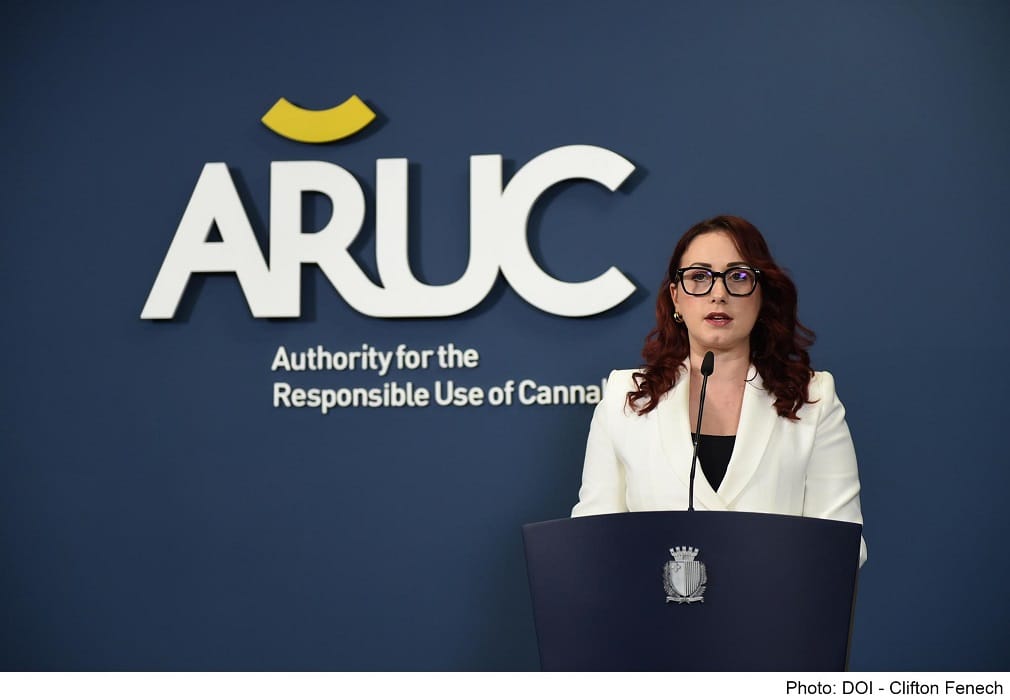
Malta's Authority for the Responsible Use of Cannabis (ARUC) has issued a formal enforcement warning to commercial retailers stocking synthetic and semi-synthetic cannabinoid products, signalling a significant escalation in the authority's posture toward a market that has operated in a legal grey zone since the original 2021 cannabis reform. The warning carries serious criminal implications: under the latest legislative amendments, distribution of these substances now constitutes drug trafficking under Maltese law.

From Grey Zone to Drug Trafficking: What the New Classification Means
ARUC has formally notified commercial shops selling cannabis-related items about legislative amendments that prohibit synthetic and semi-synthetic cannabinoids — substances designed to emulate or replicate the psychoactive effects of cannabis — and which are now subject to strict legal penalties. The regulatory shift is substantial: according to a letter issued by ARUC, the amendments classify the prohibited substances as narcotic drugs, and the reclassification carries more legal weight because dealing in such substances now constitutes drug trafficking.
ARUC highlighted its extended enforcement authority, which now includes the capacity to introduce binding regulatory measures on cannabis-related commercial activity, and stated it will adopt a zero-tolerance approach — anyone in breach of the law faces criminal proceedings. The warning letter was directed at establishments that may currently stock or distribute any product within the newly prohibited category, formally requiring them to "cease all such activities immediately and to take urgent steps to regularise their legal position."
Act No. XII of 2025 and the HHC Precedent
This latest enforcement action builds on a legislative trajectory stretching back through 2024 and 2025. In 2024, Malta had already banned the sale of HHC and 14 other synthetic cannabinoids in a crackdown on that category of products. The 2025 legislation went further: Act No. XII of 2025, signed into law on 16 May, broadened the definition of prohibited drugs to include "fully synthetic or semi-synthetic cannabinoids" such as HHC, closing the loophole that had allowed so-called "legal high" alternatives to be sold.
The 2025 legislation also excludes specified non-psychoactive phytocannabinoid-derived products containing no more than 0.2% psychoactive cannabinoids from the drug-law cannabis definition, and separately addresses prohibited synthetic and semi-synthetic cannabinoids. The framework does not authorise an unrestricted market in concentrates, edibles, or synthetic cannabinoids.

The Cannabis Shop Near a School: A Test Case for ARUC's Expanded Powers
The enforcement pressure has taken on a particularly visible dimension in a separate but related incident. ARUC acknowledged it "fully understands and empathises with the concerns expressed by parents, educators, and the general public" regarding a commercial cannabis outlet, but admitted it currently lacks statutory power to regulate for-profit outlets selling products containing less than 0.2% THC — adding, however, that it has been involved in drafting a new bill aimed at introducing formal regulation and enforcement measures for such commercial operators. Amendments passed in 2025 explicitly banned semi-synthetic cannabinoids and granted ARUC expanded powers to police commercial shops.
The episode illustrates a persistent structural challenge: while CHRAs operate within a tightly governed framework under Chapter 628, commercial retailers selling low-THC or hemp-derived products have historically operated in a parallel space with minimal oversight. ARUC's broadened mandate is intended to close that gap — but, as the school-adjacent shop case shows, the process of bringing commercial actors fully within the regulatory perimeter remains ongoing.
Members Discussion