
Culture & Community
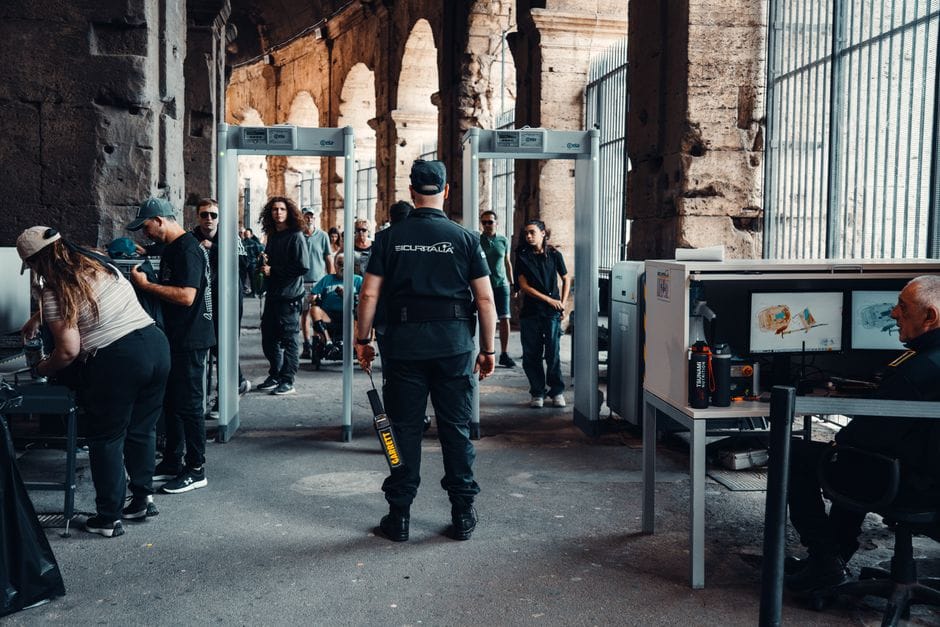
Fifteen sachets. That is the detail that keeps coming back. Not a single joint tucked into a pocket, not a gram picked up carelessly at a festival stall — fifteen individually packaged sachets of cannabis, found on a British tourist at a Maltese festival and enough, it turns out, to cross the line between personal use and something the courts treat very differently.
According to reporting by Lovin Malta, the British visitor was arrested at the festival, charged, and ultimately jailed. The case has circulated quickly on local social media, generating the predictable split between those who see it as a cautionary tale and those frustrated that a tourist apparently didn't know — or didn't think to find out — what Malta's rules actually are.
Both reactions miss the more useful question: why does this keep happening?
What Malta's Law Actually Says
Malta's 2021 cannabis reform — formally Chapter 628 of the Laws of Malta — is frequently described abroad as legalisation. It is not. The reform decriminalised possession of up to 7 grams for personal use and created a licensed framework for Cannabis Harm Reduction Associations (CHRAs), member-only non-profit clubs through which Maltese residents can access adult-use cannabis in a regulated setting. Our guide to Malta cannabis law sets out the full picture for anyone planning a visit.
Tourists are not eligible to join a CHRA. There is no legal retail dispensary. Possession above 7 grams — or possession in circumstances that suggest supply rather than personal use — remains a criminal offence. Fifteen individually wrapped sachets, by most reasonable interpretations, does not read as personal use.
None of this is secret. But neither is it prominently communicated at ports of entry, airport arrivals halls, or festival gates. The gap between what visitors assume and what the law requires is wide, and it is not narrowing on its own.
The Festival Context
Malta's summer festival calendar draws tens of thousands of European visitors, many of whom arrive from countries where cannabis law is either more permissive or simply less enforced. The Netherlands, Germany — where adult-use cannabis clubs launched in 2024 — Spain's tolerated social club model, and an increasingly liberalised Czech Republic all create an expectation among travelling Europeans that cannabis, at least in modest quantities, is unlikely to result in a prison sentence.
That assumption does not hold in Malta, particularly when quantities or packaging suggest anything other than personal consumption. Enforcement at festivals is active, and Maltese courts have shown a willingness to impose custodial sentences in cases that go beyond the decriminalised threshold.
ARUC (Authority on the Responsible Use of Cannabis), Malta's regulatory body for adult-use cannabis, has published guidance for the CHRA framework, but consumer-facing information specifically aimed at foreign visitors remains underdeveloped. This is a policy gap that the authority and the events industry would both benefit from addressing directly.
The Harm Reduction Argument
From a harm reduction perspective — the principle that policy should minimise real-world damage rather than simply punish behaviour — a tourist jailed for cannabis possession is a poor outcome for everyone. It does not deter future visitors who haven't heard the story. It consumes court and prison resources. And it does nothing to connect the person involved with accurate information about Maltese law that might have changed their behaviour before the festival gate.
CHRAs operating across Malta have become quiet engines of exactly this kind of community education for residents. Members learn the rules through the registration process itself. Visitors have no equivalent pathway. A laminated card at the airport is not a cannabis policy, but it is a start.
A Mirror the Industry Should Look Into
There is a version of this story that gets written every summer, with a rotating cast of nationalities and a consistent plot: European visitor, Maltese festival, cannabis, arrest, court. The details change. The structural gap does not.
Malta has built something genuinely interesting with its CHRA model — a harm reduction framework with real infrastructure, a functioning regulator, and a growing network of associations. The island's reform is cited in European policy discussions as a reference point. But a legal framework that residents can navigate and tourists cannot is, at best, incomplete.
The British tourist's 15 sachets will be forgotten by September. The question of how Malta communicates its cannabis rules to the hundreds of thousands of visitors who arrive every summer — and what happens when they get it wrong — will still be waiting for an answer.
Sources:
Lovin Malta
Featured image: Photo by HAMZA YAICH on Pexels
Members Discussion