News
Germany's experiment with regulated, non-commercial cannabis clubs is expanding faster than many observers expected. The total number of approved cannabis cultivation associations — known in German as Anbauvereinigungen — is approaching 500, according to reporting by the International Cannabis Business Conference, marking a significant milestone in what is still one of the most closely watched cannabis policy experiments in Europe.
The German model, introduced under the Cannabisgesetz (Cannabis Act) that came into force in April 2024, permits adults to cultivate and collectively share cannabis through non-profit membership associations, subject to strict regulatory conditions. The associations are capped at 500 members each, must operate on a not-for-profit basis, and cannot engage in commercial cannabis sales — a structure that bears notable similarities to Malta's own adult-use framework.
A European Benchmark in Real Time
Germany's rapid club expansion matters beyond its own borders because it represents the largest real-world test of a membership-based, non-commercial adult-use cannabis model in the European Union. Regulators, researchers, and policymakers from Lisbon to Valletta are watching how the German system handles compliance, public health outcomes, and political durability.
For context, Germany is the EU's most populous member state, with over 84 million residents. Even approaching 500 approved associations — each serving up to 500 members — the model covers a relatively small proportion of German cannabis consumers, suggesting that demand substantially outpaces licensed supply. Early reporting from German civil society organisations has flagged lengthy approval timelines and administrative inconsistency between federal states (Länder) as ongoing friction points.
The associations are not retail outlets. Members may receive cannabis cultivated collectively, but cannabis cannot be purchased, advertised, or sold. This non-commercial structure was designed to reduce the commercial incentives associated with broader legalisation models, while still bringing adult-use cannabis out of illicit supply chains.
Parallels and Contrasts with Malta's CHRA Framework
Malta's framework under Chapter 628 of the Laws of Malta, which established the Cannabis Harm Reduction Association (CHRA) model overseen by ARUC (Authority on the Responsible Use of Cannabis), Malta's cannabis regulator for adult use, was itself an early European iteration of the membership-club concept — predating Germany's law by roughly two years. As our guide to Malta cannabis law explains, Maltese adults may join a licensed CHRA, receive cannabis grown collectively, and consume within defined personal limits.
Like Germany, Malta caps membership per association and prohibits commercial cannabis sales through the CHRA channel. Unlike Germany, Malta operates as a unitary state with a single national regulator, meaning that approval and compliance processes do not vary by region — an administrative advantage that has allowed ARUC to apply relatively consistent standards across all licensed CHRAs.
Where Germany's sheer scale creates challenges — nearly 500 clubs spread across 16 federal states with varying local enforcement cultures — Malta's compact geography means that regulatory oversight is more direct. ARUC can, in principle, inspect and audit any CHRA in the country within a single working day. Whether that proximity translates into higher compliance rates is a question that Malta's own regulators and the broader research community are still examining.
What 500 Clubs Tells Us About Demand
The near-500 figure in Germany is not simply a bureaucratic count — it reflects the depth of unmet demand for legal, regulated cannabis access among European adults. In a country where illicit cannabis consumption was already widespread, the prospect of a legal, non-commercial alternative has generated substantial interest from civil society organisers willing to take on the administrative and legal responsibilities of running a compliant association.
This demand signal matters for European policymakers debating whether membership-club models are a sustainable long-term framework or a transitional measure. Critics of the German model argue that the non-commercial cap will always leave significant demand unmet, pushing consumers toward illicit sources for anything beyond what their association can produce. Proponents counter that the model prioritises harm reduction over market completeness, and that quality-controlled, tested cannabis from a known source — even in limited quantities — is preferable to unregulated supply.
The European Union Drugs Agency (EUDA), the EU's drug monitoring body, has indicated that it will be tracking Germany's rollout as a policy case study, with data collection expected to feed into broader European assessments of cannabis regulation models in the coming years.
Looking Ahead
With Germany's club total nearing 500 and likely to continue growing, pressure is building on German federal authorities to streamline approvals and harmonise standards across states. For observers in Malta and elsewhere in the Mediterranean, the German experiment offers a live test of whether the membership-club model — built on harm reduction principles rather than commercial logic — can scale without losing its core character.
The answer will shape cannabis policy conversations across the EU for years to come. Malta, with its earlier start and smaller regulatory footprint, may ultimately offer as instructive a dataset as Germany's larger but more complex rollout — and both models will benefit from closer comparative research.
Sources:
International Cannabis Business Conference
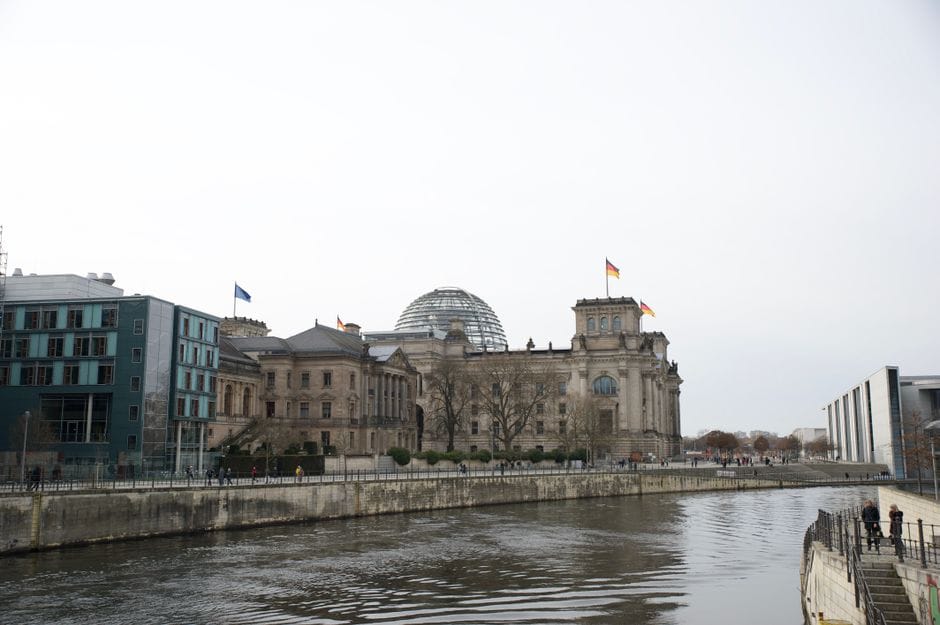
Featured image: Photo by Julia Wolff on Pexels
Members Discussion