News
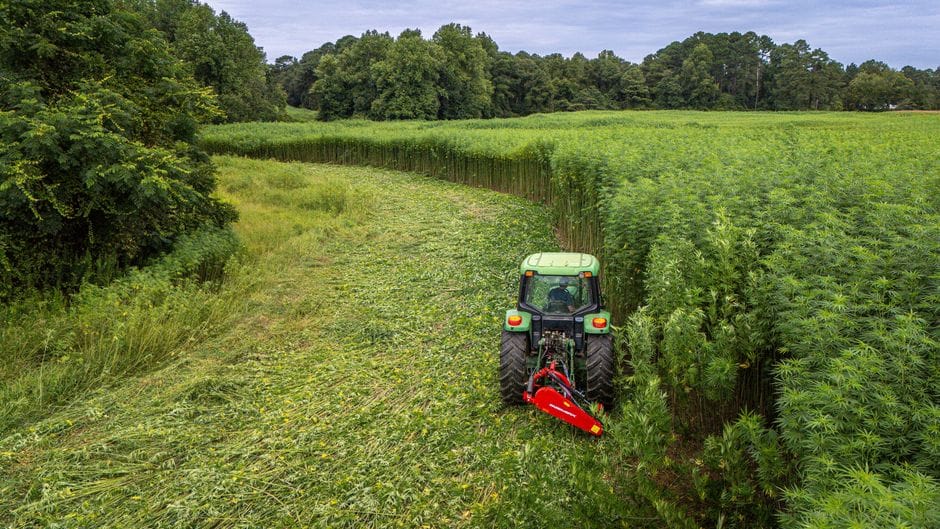
Somewhere in Brandenburg, a farmer is harvesting hemp stalks destined for insulation panels. In Bavaria, another grows certified seed stock for export. A third, in Saxony, supplies a cosmetics company with CBD-rich flower under a pharmaceutical licence. All three appear in different columns of different spreadsheets — if they appear at all.
That is the quietly frustrating reality behind Germany's industrial hemp sector: cultivation is growing, interest is real, but the data that would let anyone say precisely how much hemp Germany produces remains fragmented, inconsistently collected, and difficult to compare year on year.
What the Numbers Actually Show
Germany has been a legal hemp producer for decades. The crop was re-authorised for cultivation in 1996, provided farmers used EU-approved seed varieties containing no more than 0.3 percent THC (tetrahydrocannabinol, the compound primarily associated with psychoactive effects). For years, acreage stayed modest — a few thousand hectares nationally, concentrated in states like Thuringia and Mecklenburg-Vorpommern where soil conditions and existing agricultural infrastructure made sense.
That picture began shifting noticeably after 2018, when European interest in CBD products — cannabidiol, a non-intoxicating hemp-derived compound — drove demand for flower and extract across the continent. German cultivation figures reported to the EU rose, though reporting methodologies varied enough between states to make clean comparisons difficult. The International Cannabis Business Conference, which has tracked European hemp sector developments, has noted this data inconsistency as a recurring obstacle for producers and investors trying to model the market.
Germany's Federal Office for Agriculture and Food (Bundesanstalt für Landwirtschaft und Ernährung, or BLE) collects some cultivation data, but full national figures depend on aggregation from sixteen individual federal states — each with its own administrative rhythm. The result is that published totals tend to lag reality by one to two growing seasons.
Why It Matters Beyond Germany's Borders
Germany is the largest economy in the European Union and one of its most significant agricultural producers. What happens in German hemp fields has downstream consequences for the entire European supply chain — from seed breeders in the Netherlands to fibre processors in France to CBD extract buyers in Scandinavia.
For Mediterranean producers, the picture is particularly relevant. Italy has seen its own hemp revival, with cultivation expanding under similarly complex regulatory conditions. Spain has a small but growing sector, particularly in Andalusia. And Malta, while not a hemp-producing country in any agricultural sense, sits inside the same EU regulatory architecture that governs which seed varieties are legal, what THC thresholds apply, and how hemp-derived ingredients can be marketed or imported.
Malta's 2021 cannabis reform — formally Chapter 628 of the Laws of Malta — created a framework for adult-use cannabis through licensed Cannabis Harm Reduction Associations (CHRAs), the non-profit clubs through which registered members can access cannabis in a regulated setting. Hemp is a separate legal category, but the two sectors increasingly intersect: hemp-derived CBD products circulate in the same retail environment as adult-use cannabis, and Maltese consumers encounter both. Our ARUC Compliance Handbook covers how these distinctions apply under Maltese law for adult consumers.
The Data Gap as a Policy Problem
There is a practical cost to imprecise cultivation data. Farmers making multi-year investment decisions — hemp requires specialist equipment, certified seed sourcing, and reliable off-take contracts — need market visibility. Processors need to know whether domestic supply will meet their capacity. Regulators designing agricultural subsidy frameworks need accurate baseline figures.
The European Union's Common Agricultural Policy provides support for hemp farmers, but access to those payments depends on correct classification of cultivated varieties and accurate area declarations. If reporting is inconsistent, some legitimate producers may be miscategorised; others may not be counted at all.
The European Union Drugs Agency (EUDA), which monitors drug trends and increasingly tracks legal cannabis markets across member states, has flagged the need for harmonised hemp data collection as part of its broader push for coherent EU-level cannabis monitoring. Without it, estimates of Germany's hemp sector — and the wider European one — will remain educated guesses dressed up as statistics.
A Crop in Search of a Clearer Picture
None of this means the German hemp sector is struggling. By most available indicators, it is expanding: more approved varieties, more diverse end uses (textiles, construction, food supplements, cosmetics, pharmaceuticals), and growing interest from both conventional farmers looking to diversify and specialist producers chasing premium markets.
But expansion without accurate measurement is harder to govern, harder to finance, and harder to defend to sceptical policymakers who still conflate hemp with adult-use cannabis despite decades of legal separation between the two.
Germany's hemp fields are almost certainly larger than the last published figures suggest. The more interesting question is whether European agricultural institutions will build the data infrastructure to know for certain — before the next growing season makes the gap wider still.
Sources:
International Cannabis Business Conference
Featured image: Photo by Mark Stebnicki on Pexels
Members Discussion