
Culture & Community
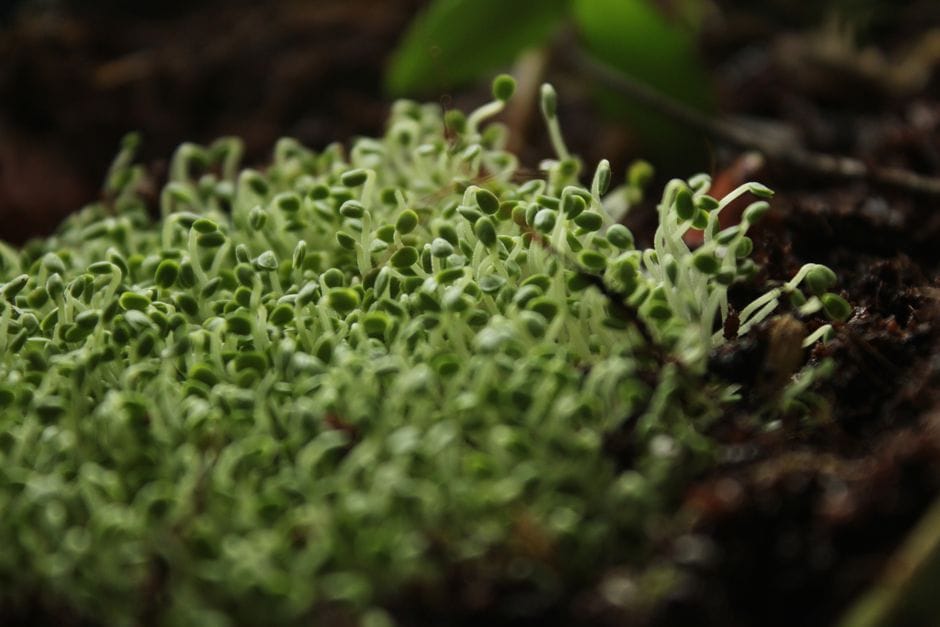
Every cannabis cultivation cycle begins with the same foundational decision: do you start from seed, or do you propagate from a clone? The choice is deceptively simple on the surface, but it carries implications that ripple through the entire grow — from how uniform your canopy looks at week six, to how confidently you can predict your final yield. Understanding the biology behind each method helps growers — whether tending a small personal garden or managing a larger licensed operation — make that choice deliberately rather than by default.
What Seeds Actually Give You
Cannabis seeds, even from the same packet — meaning plants that share the same mother and father — are rarely identical to one another. This is what cultivators and breeders mean when they discuss genetic stability. A batch of ten or twenty seeds from the same variety will typically express a range of phenotypes: subtle (and sometimes not-so-subtle) differences in structure, leaf shape, internodal spacing, flowering time, aroma profile, and cannabinoid expression. This is not a defect unique to poorly bred varieties; it is a biological reality rooted in sexual reproduction.
According to a cultivation explainer published by Revista THC, even conscientiously bred varieties rarely achieve the kind of uniformity that clonal propagation delivers as standard. The practical consequence is that a seed-based grow requires more observation and, ideally, a selection process — identifying which individuals within a batch best meet the grower's specific criteria before committing to scale.
That variability, however, is not purely a liability. It is precisely what makes seeds valuable for breeders and for growers searching for a standout individual. Running a large germination batch with the explicit goal of phenotype hunting — evaluating plants for pest resistance, vigour, yield potential, cannabinoid profile, or climatic adaptability — is a legitimate and widely practised cultivation strategy. The plant that rises to the top of that selection process can then be preserved as a mother plant, becoming the genetic source for an essentially unlimited number of identical cuttings going forward.
The Logic of Clonal Consistency
A clone — also called a cutting or esqueje in Spanish-language cultivation literature — is a vegetative cutting taken from an established plant and rooted to produce a genetically identical offspring. Because the clone carries the exact same genetic information as its mother, it will, under equivalent conditions, behave in an equivalent way: the same flowering time, the same cannabinoid and terpene expression, the same structural characteristics. For any grower whose priority is harvest predictability, this consistency is the central argument for clonal propagation.
There is an important nuance here, though. Genetics are not destiny in isolation — environment shapes expression. The same clone cultivated in two different settings — say, a humid coastal climate versus a drier inland one — will adapt its morphology to local conditions. This phenomenon, known as phenotypic plasticity, means that even genetically identical plants will not look or perform identically if their growing environments differ substantially. The genetic blueprint is the same; the plant's response to its surroundings is not.
For Maltese home growers operating under Malta's 2021 cannabis reform (Chapter 628 of the Laws of Malta), which permits adults to cultivate up to four plants for personal adult-use, this distinction is practically relevant. A grower who sources a cutting from a reliable plant — one that has already been observed to perform well in Malta's warm, dry Mediterranean summers — carries that environmental track record into the next cycle in a way that a seed, purchased without local performance data, cannot replicate.
The Hidden Costs of Clonal Production
Clonal propagation does come with real overhead, and it is worth naming that clearly. To produce cuttings at any meaningful scale, a grower must first maintain a mother plant — kept in a permanent vegetative state under an uninterrupted light cycle — which demands dedicated space, resources, and attention outside the main production cycle. Each cutting then requires a rooting period, typically involving a humidity dome or propagation environment, followed by a hardening-off phase before it is ready for transplant. At small scale, this is manageable. At medium or large scale, it represents a significant logistical and labour commitment.
This is one reason why Cannabis Harm Reduction Associations (CHRAs) — the member-based, non-profit clubs licensed under ARUC (Authority on the Responsible Use of Cannabis), Malta's regulator for adult cannabis use — face genuine operational complexity if they seek to supply members with consistent, characterised cannabis. Producing uniform batches from seed alone is difficult without a prior selection and stabilisation process. Clonal propagation solves the consistency problem but introduces infrastructure requirements that a small licensed operation must plan for carefully.
Stability, Prohibition, and What Breeders Lost
There is a broader context worth acknowledging here. The genetic instability that characterises many commercial cannabis seed lines today is not simply a failure of modern breeding — it is, in large part, a legacy of prohibition. Decades during which cannabis cultivation was criminalised across most of the world meant that breeders worked in secrecy, with limited resources, limited peer review, and without the institutional continuity that plant breeding in other agricultural sectors takes for granted. Varieties that in a legal, well-resourced environment might have been stabilised over successive generations were instead distributed widely in semi-stable form, prioritising availability over consistency.
As regulated markets mature across Europe — and as Malta's own framework continues to develop under ARUC oversight — the conditions for more rigorous cannabis breeding are slowly improving. Stable, reliably characterised seed lines are not an impossibility; they are simply the product of time, resources, and the kind of open scientific collaboration that prohibition actively prevented.
Whether you start from seed or clone ultimately depends on what you are trying to achieve. Seeds offer the raw genetic potential for discovery and selection; clones deliver the certainty that comes from working with a known quantity. Both have a place in a mature, responsible cultivation culture — and understanding the distinction is the first step toward growing with intention.
Featured image: Photo by Jahra Tasfia Reza on Pexels
Members Discussion